Misconceptions plague society, including those relating to scientific areas such as astronomy. But just how common are astronomy misconceptions? We collected data from 358 people around the world to find out!
A few disclaimers before we get into the data. This is by no means a perfect scientific study. Although we tried to reach as many people as possible, the gender ratio was about 2:1 (two-thirds male and only one-third female), one-third of the respondents were from the United States, and 60% of the respondents classed themselves as having a higher than average interest in astronomy. This could either mean that people are more interested in space than we initially expected, or it more likely means that the majority of our respondents were slightly more on the intellectual side since many of our respondents came from survey exchange platforms, online creative communities, and educational content channels. Regardless, the data is still very interesting, even if it does not perfectly represent society as a whole. Now on to the data!
Quick Facts
- More than 1 in 3 people don't understand how Earth's seasons work
- 1 in 3 people think there is no gravity in space
- 1 in 6 people think Saturn is the only planet in the Solar System with rings
- 1 in 11 people think "shooting stars" are literal stars shooting across the sky
- 1 in 13 people think the Sun is the largest star in the entire Universe
- 1 in 21 people think "the Milky Way" is the same thing as "the Universe"
- 1 in 3 people believe 25% of astronomy misconceptions
- 1 in 7 people are unsure about 25% of astronomy misconceptions
- Men tend to be more interested and know more about space than women
- The general populace of India have a widespread interest in space, yet don't know much about astronomy
- PhD's average less astronomy knowledge than primary/elementary students
- People who have only completed secondary education (high school) tend to know the most about astronomy
- Primary/elementary students have more interest in space than any other education level
The Most Common Astronomy Misconceptions
Participants were asked 30 true-or-false questions with the additional option of "I don't know". All the questions were in relation to supposed common misconceptions about space. In all the graphs and statistics in this article, we class correct answers as "space knowledge", incorrect answers as "belief in space misconceptions" or "mistaken by space misconceptions", and "I don't know" answers as "unsurety of space misconceptions."
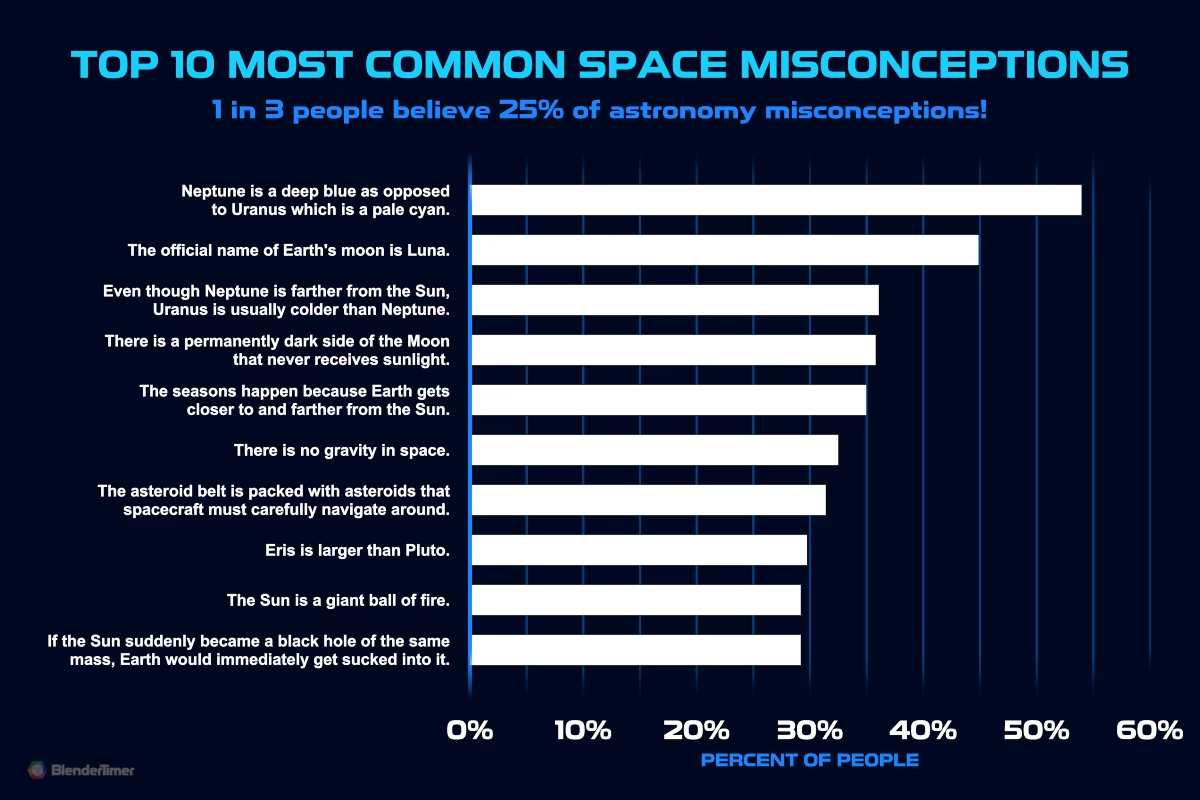
Most Common Space Misconceptions
| Misconception | Percent of People |
|---|
| Neptune is a deep blue as opposed to Uranus which is a pale cyan. (false) | 54.8% |
|---|
| The official name of Earth's moon is Luna. (false) | 45.5% |
|---|
| Even though Neptune is farther from the Sun, Uranus is usually colder than Neptune. (false) | 36.6% |
|---|
| There is a permanently dark side of the Moon that never receives sunlight. (false) | 36.3% |
|---|
| The seasons happen because Earth gets closer to and farther from the Sun. (false) | 35.5% |
|---|
| There is no gravity in space. (false) | 33.0% |
|---|
| The asteroid belt is packed with asteroids that spacecraft must carefully navigate around. (false) | 31.8% |
|---|
| Eris is larger than Pluto. (false) | 30.2% |
|---|
| The Sun is a giant ball of fire. (false) | 29.6% |
|---|
| If the Sun suddenly became a black hole of the same mass, Earth would immediately get sucked into it. (false) | 29.6% |
|---|
| Rockets propel themselves by pushing back on the air. (false) | 25.4% |
|---|
| Mercury is the hottest planet because it's closest to the Sun. (false) | 22.4% |
|---|
| The sky in space is bright because there are stars in every direction. (false) | 19.8% |
|---|
| A meteor shower means Earth is passing through a stream of meteoroids that disintegrate in Earth's atmosphere. (true) | 19.6% |
|---|
| The Sun is stationary in space while the planets orbit it. (false) | 19.6% |
|---|
| The Sun is at the exact center of all the planet's orbits. (false) | 19.3% |
|---|
| Saturn is the only planet in the Solar System with rings. (false) | 16.8% |
|---|
| A telescope is needed to see the Milky Way galaxy. (false) | 14.8% |
|---|
| Space is a perfect vacuum containing absolutely nothing. (false) | 13.1% |
|---|
| The Sun is yellow. (false) | 12.6% |
|---|
| "Shooting stars" are stars that shoot across the sky. (false) | 8.9% |
|---|
| The Moon emits light. (false) | 8.7% |
|---|
| The Sun is the largest star in the Universe. (false) | 7.8% |
|---|
| The planet's orbits in the Solar System are near-perfectly evenly spaced. (false) | 6.7% |
|---|
| The stars in a constellation are physically close together. (false) | 6.4% |
|---|
| To send a spacecraft to another planet you have to point it at the planet and accelerate. (false) | 5.6% |
|---|
| "The Milky Way" is another term for "the Universe." (false) | 4.8% |
|---|
| When we look at distant galaxies or stars, we see them as they are right now. (false) | 3.1% |
|---|
| The stars we see in the night sky are all roughly the same size. (false) | 1.4% |
|---|
| Earth is the only planet in the Solar System with a moon(s). (false) | 0.8% |
|---|
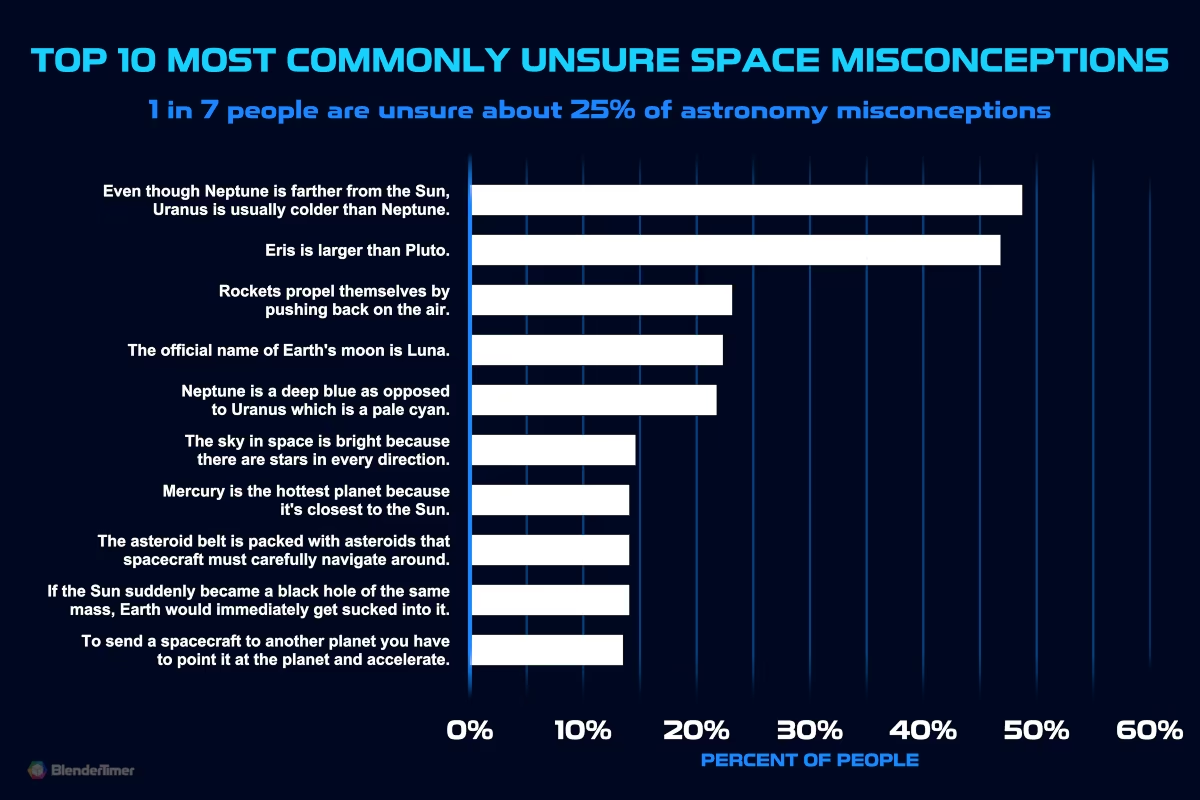
Most Commonly Unsure Space Misconceptions
| Misconception | Percent of People |
|---|
| Even though Neptune is farther from the Sun, Uranus is usually colder than Neptune. (false) | 49.4% |
|---|
| Eris is larger than Pluto. (false) | 47.5% |
|---|
| Rockets propel themselves by pushing back on the air. (false) | 23.5% |
|---|
| The official name of Earth's moon is Luna. (false) | 22.6% |
|---|
| Neptune is a deep blue as opposed to Uranus which is a pale cyan. (false) | 22.1% |
|---|
| The sky in space is bright because there are stars in every direction. (false) | 14.8% |
|---|
| Mercury is the hottest planet because it's closest to the Sun. (false) | 14.3% |
|---|
| The asteroid belt is packed with asteroids that spacecraft must carefully navigate around. (false) | 14.3% |
|---|
| If the Sun suddenly became a black hole of the same mass, Earth would immediately get sucked into it. (false) | 14.3% |
|---|
| To send a spacecraft to another planet you have to point it at the planet and accelerate. (false) | 13.7% |
|---|
| A meteor shower means Earth is passing through a stream of meteoroids that disintegrate in Earth's atmosphere. (true) | 12.9% |
|---|
| Space is a perfect vacuum containing absolutely nothing. (false) | 10.6% |
|---|
| The Sun is at the exact center of all the planet's orbits. (false) | 9.8% |
|---|
| The planet's orbits in the Solar System are near-perfectly evenly spaced. (false) | 8.9% |
|---|
| The stars in a constellation are physically close together. (false) | 8.7% |
|---|
| There is a permanently dark side of the Moon that never receives sunlight. (false) | 8.1% |
|---|
| "Shooting stars" are stars that shoot across the sky. (false) | 5.9% |
|---|
| The Sun is yellow. (false) | 5.6% |
|---|
| A telescope is needed to see the Milky Way galaxy. (false) | 5.6% |
|---|
| The seasons happen because Earth gets closer to and farther from the Sun. (false) | 4.8% |
|---|
| The Sun is a giant ball of fire. (false) | 4.8% |
|---|
| There is no gravity in space. (false) | 4.5% |
|---|
| When we look at distant galaxies or stars, we see them as they are right now. (false) | 4.2% |
|---|
| The Sun is stationary in space while the planets orbit it. (false) | 3.9% |
|---|
| Saturn is the only planet in the Solar System with rings. (false) | 3.6% |
|---|
| "The Milky Way" is another term for "the Universe." (false) | 3.4% |
|---|
| The Sun is the largest star in the Universe. (false) | 3.1% |
|---|
| Earth is the only planet in the Solar System with a moon(s). (false) | 2.2% |
|---|
| The Moon emits light. (false) | 2.0% |
|---|
| The stars we see in the night sky are all roughly the same size. (false) | 2.0% |
|---|
There are many alarming statistics here. Possibly the most alarming result is that at least 1 in 3 people are incorrect in how they think Earth's seasons work. Also a bit alarming is that 1 in 3 people also think there is no gravity in space... not sure how they think orbiting works. It's also very surprising that 36% of people still believe that there is a permanently dark side of the Moon.
Space Knowledge, Misconceptions, and Interest by Demographics
Some of the most interesting statistics are looking at results by various demographics (age, gender, country, etc.).
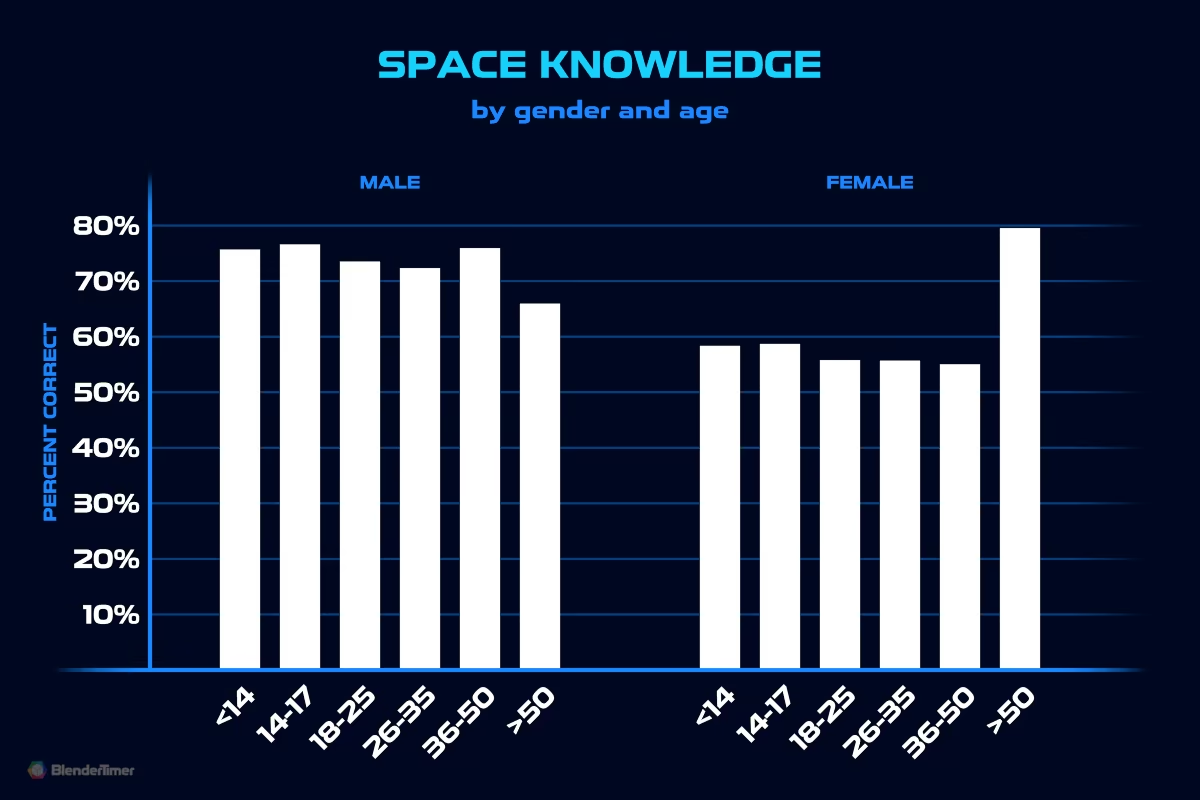
Space Knowledge by Gender and Age
| Age | Male | Female |
|---|
| <14 | 75.7% | 58.3% |
|---|
| 14-17 | 76.6% | 58.7% |
|---|
| 18-25 | 73.5% | 55.8% |
|---|
| 26-35 | 72.3% | 55.7% |
|---|
| 36-50 | 75.9% | 55.0% |
|---|
| >50 | 65.9% | 79.5% |
|---|
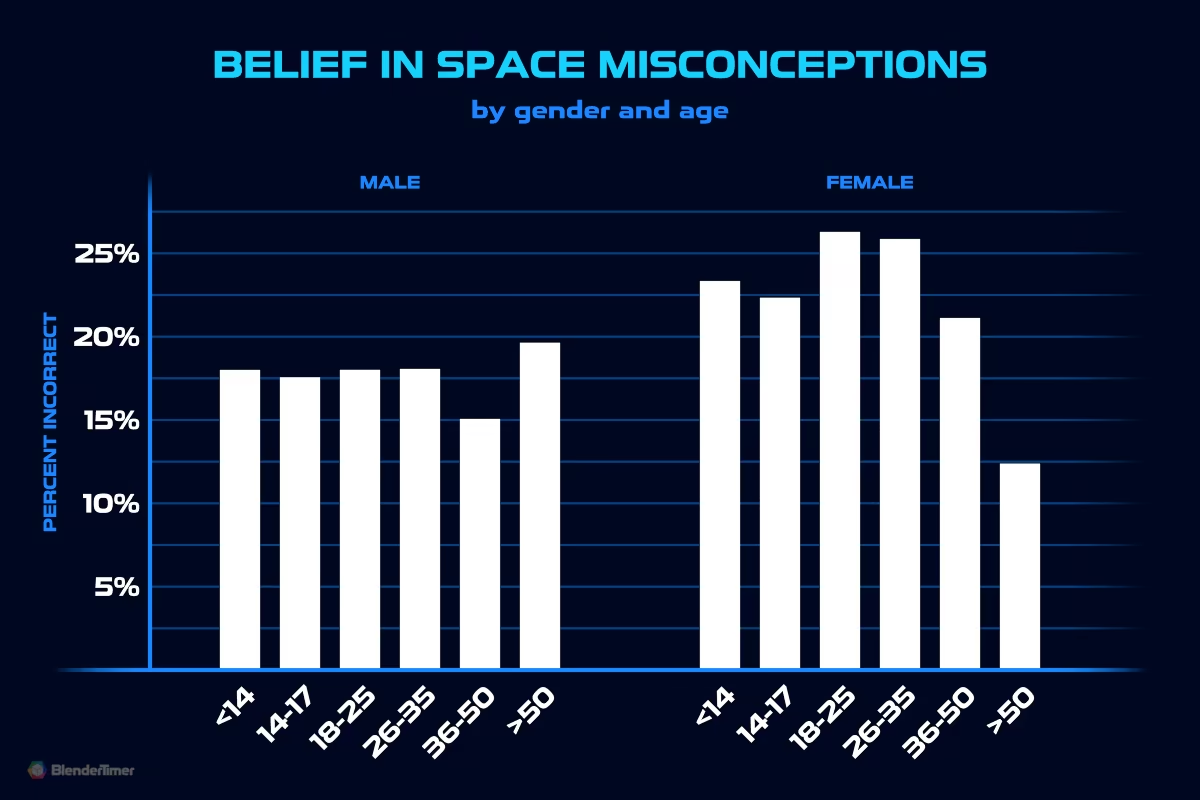
Belief in Space Misconceptions by Gender and Age
| Age | Male | Female |
|---|
| <14 | 18.0% | 23.3% |
|---|
| 14-17 | 17.6% | 22.3% |
|---|
| 18-25 | 18.0% | 26.3% |
|---|
| 26-35 | 18.1% | 25.9% |
|---|
| 36-50 | 15.1% | 21.1% |
|---|
| >50 | 19.6% | 12.4% |
|---|
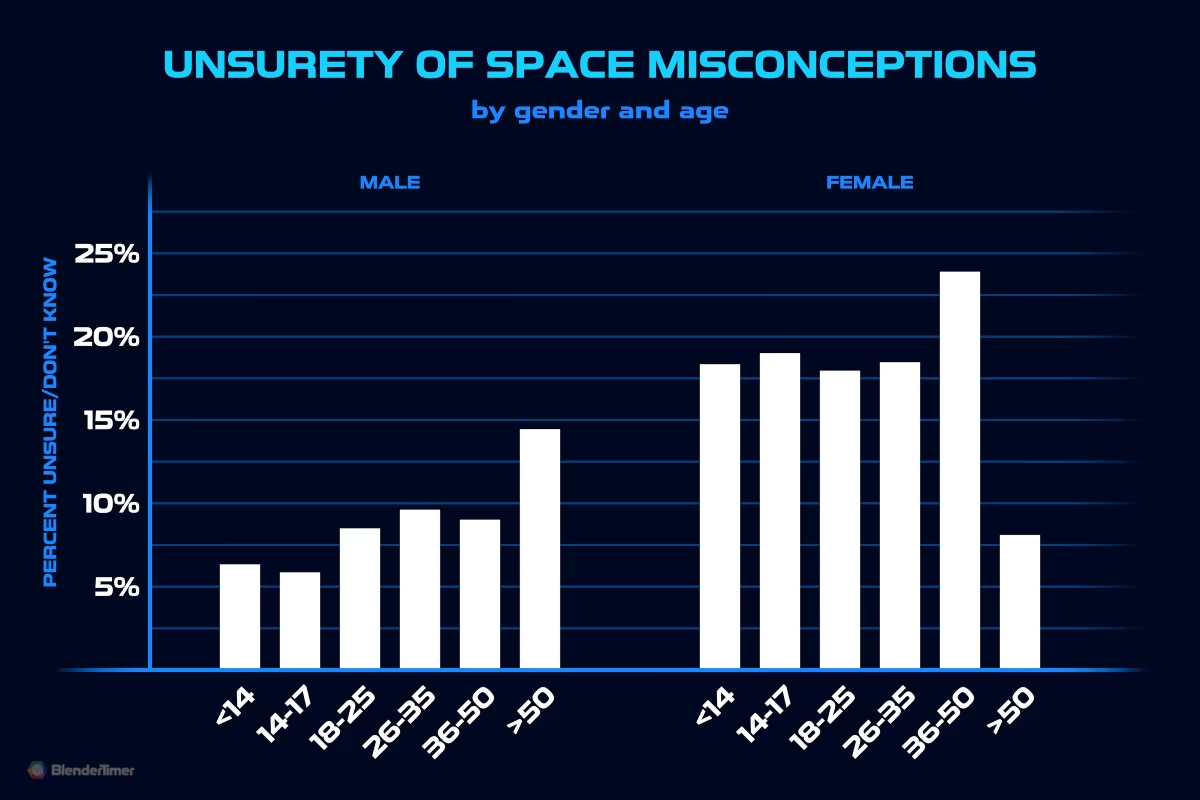
Unsurety of Space Misconceptions by Gender and Age
| Age | Male | Female |
|---|
| <14 | 6.3% | 18.3% |
|---|
| 14-17 | 5.6% | 19.0% |
|---|
| 18-25 | 8.5% | 18.0% |
|---|
| 26-35 | 9.6% | 18.5% |
|---|
| 36-50 | 9.0% | 23.9% |
|---|
| >50 | 14.4% | 8.1% |
|---|
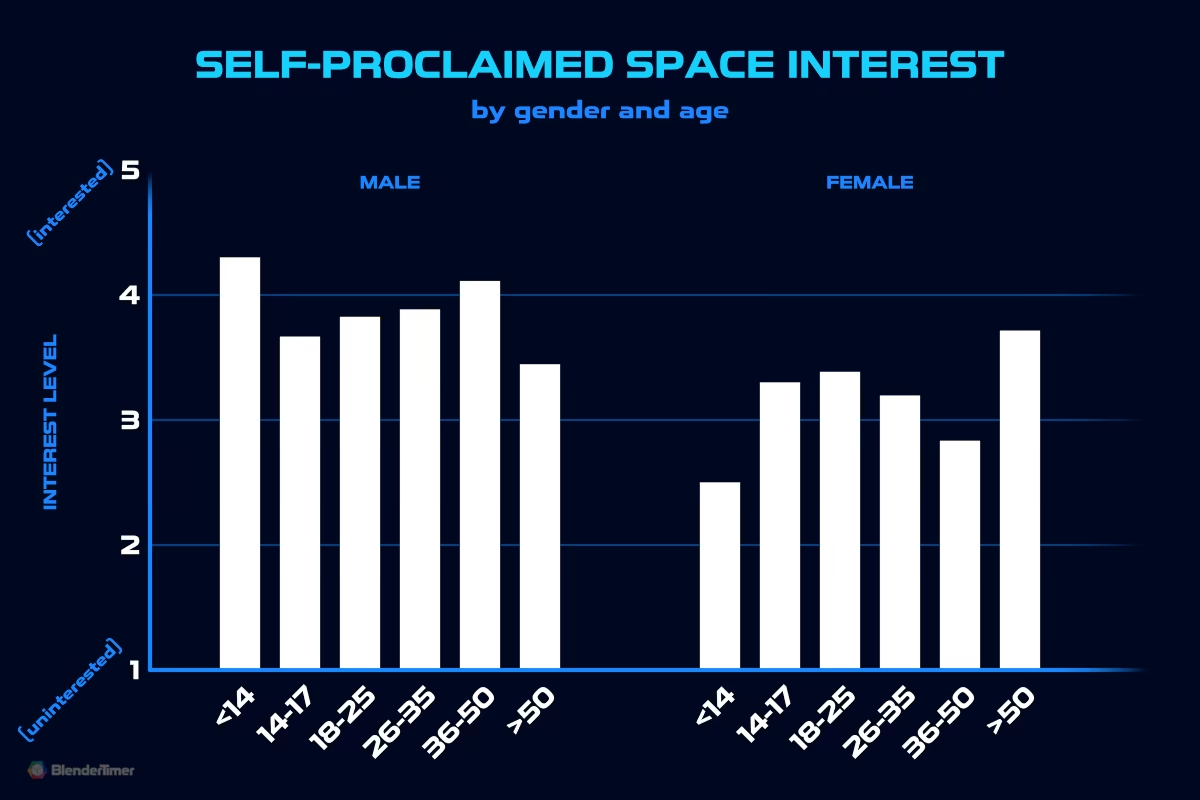
Self-proclaimed Space Interest by Gender and Age
| Age | Male | Female |
|---|
| <14 | 4.30 | 2.50 |
|---|
| 14-17 | 3.67 | 3.30 |
|---|
| 18-25 | 3.83 | 3.39 |
|---|
| 26-35 | 3.88 | 3.20 |
|---|
| 36-50 | 4.11 | 2.83 |
|---|
| >50 | 3.44 | 3.71 |
|---|
From the data above, it appears that males tend to know more about space and astronomy, but also tend to be more confidently wrong than females. However, males also tend to have higher interest in astronomy, which is likely the reason for having more knowledge about it.
Perhaps the most surprising is that age doesn't seem to have a huge affect on space knowledge or belief in misconceptions (within reason).
Each survey participant was asked to give a rating from 1-5 on how interested they were in space/astronomy. 1 being very uninterested and 5 being very interested.
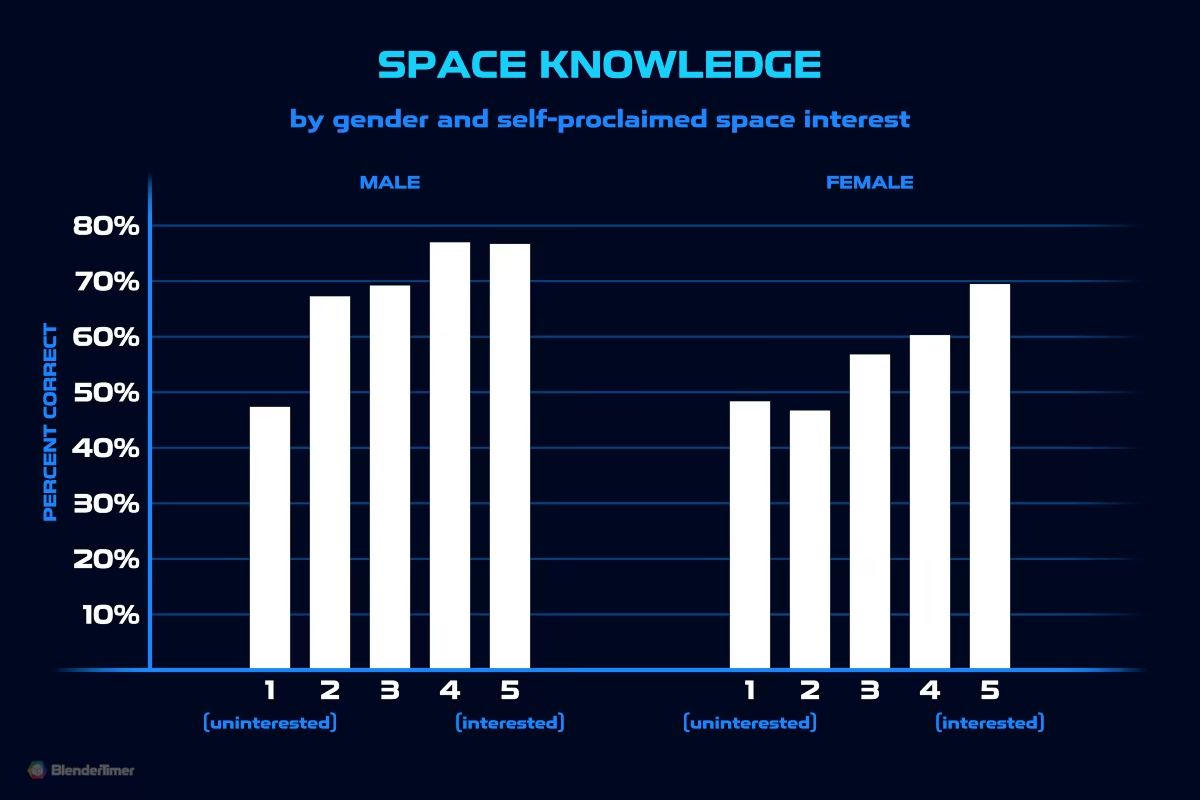
Space Knowledge by Gender and Self-proclaimed Space Interest
| Interest | Male | Female |
|---|
| 1 (very uninterested) | 47.3% | 48.3% |
|---|
| 2 (uninterested) | 67.2% | 46.7% |
|---|
| 3 (average) | 69.2% | 56.8% |
|---|
| 4 (interested) | 77.0% | 60.3% |
|---|
| 5 (very interested) | 76.7% | 69.5% |
|---|
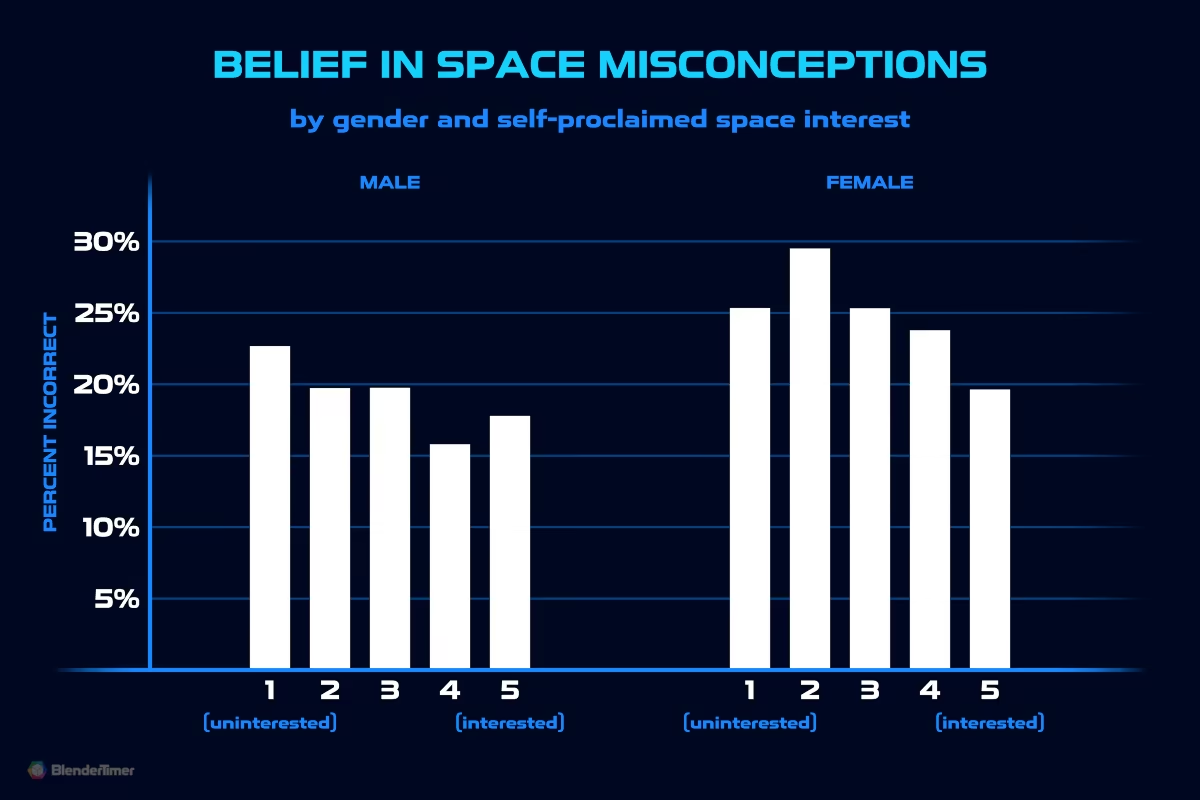
Belief in Space Misconceptions by Gender and Self-proclaimed Space Interest
| Interest | Male | Female |
|---|
| 1 (very uninterested) | 22.7% | 25.3% |
|---|
| 2 (uninterested) | 19.7% | 29.5% |
|---|
| 3 (average) | 19.7% | 25.3% |
|---|
| 4 (interested) | 15.8% | 23.8% |
|---|
| 5 (very interested) | 17.8% | 19.6% |
|---|
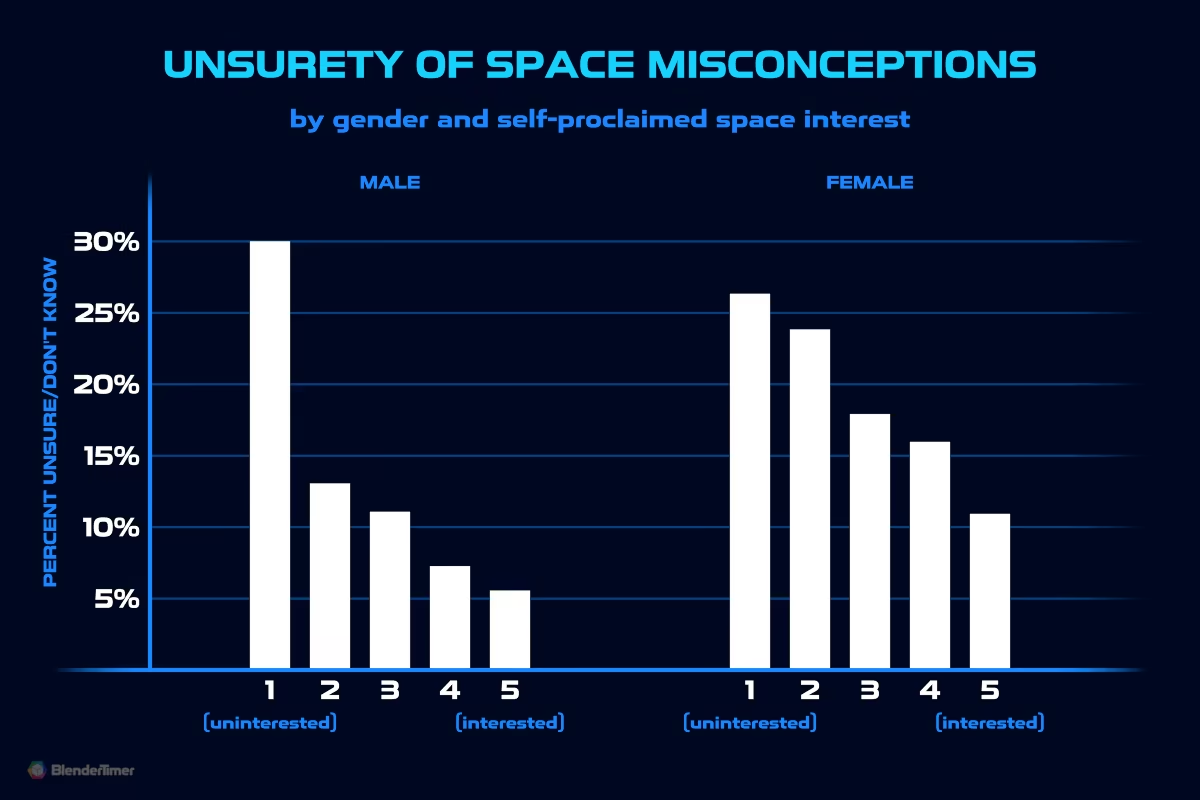
Unsurety of Space Misconceptions by Gender and Self-proclaimed Space Interest
| Interest | Male | Female |
|---|
| 1 (very uninterested) | 30.0% | 26.3% |
|---|
| 2 (uninterested) | 13.1% | 23.8% |
|---|
| 3 (average) | 11.1% | 17.9% |
|---|
| 4 (interested) | 7.3% | 16.0% |
|---|
| 5 (very interested) | 5.6% | 10.9% |
|---|
These results are about as expected, more interest in space usually equals more knowledge about space. Although, it is interesting to note that males with a space interest level of 4 actually believed fewer misconceptions than males with a space interest level of 5, though the difference is negligable.
Participants were also asked which country they currently lived in (this will differ slightly from country of origin). For obvious reasons, results from countries with very few respondents would not be accurate, so countries with fewer than 5 respondents are grouped into "others".
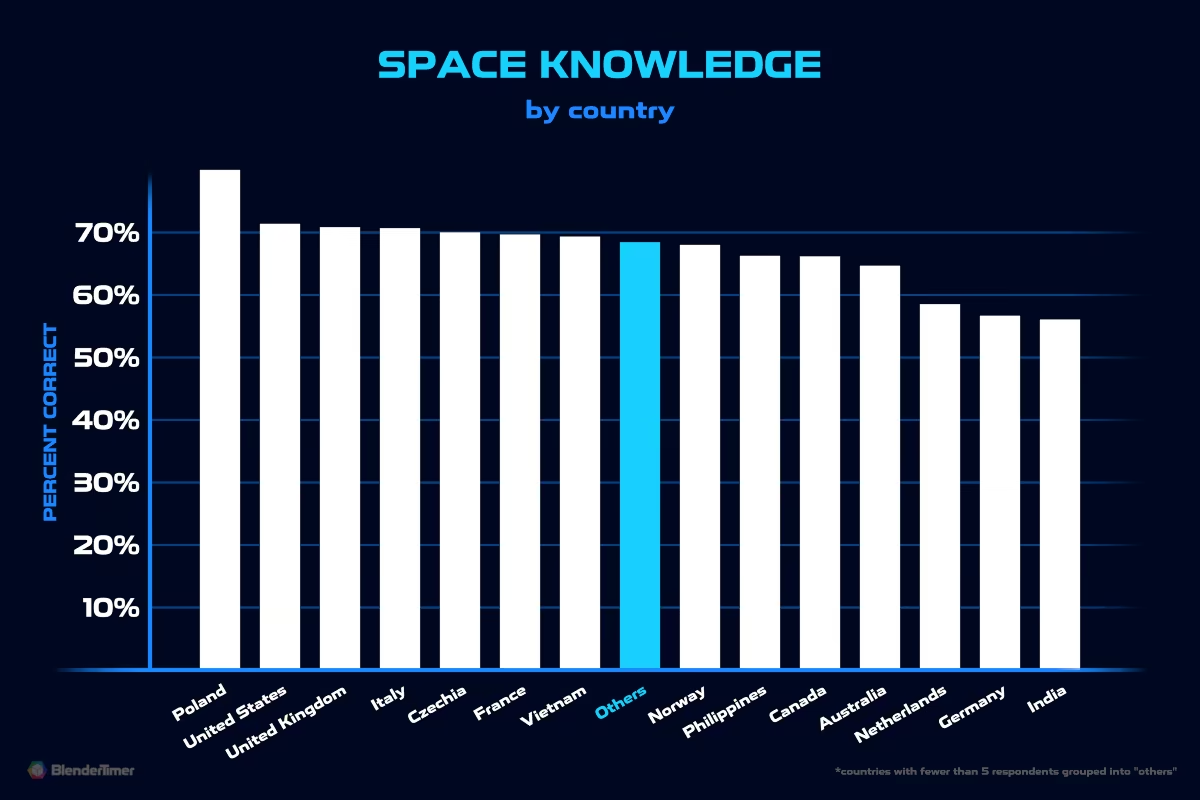
Space Knowledge by Country
| Country | |
|---|
| Poland | 80.0% |
|---|
| United States | 71.4% |
|---|
| United Kingdom | 70.8% |
|---|
| Italy | 70.7% |
|---|
| Czechia | 70.0% |
|---|
| France | 69.7% |
|---|
| Vietnam | 69.3% |
|---|
| Others | 68.4% |
|---|
| Norway | 68.0% |
|---|
| Philippines | 66.3% |
|---|
| Canada | 66.2% |
|---|
| Australia | 64.7% |
|---|
| Netherlands | 58.5% |
|---|
| Germany | 56.7% |
|---|
| India | 56.1% |
|---|
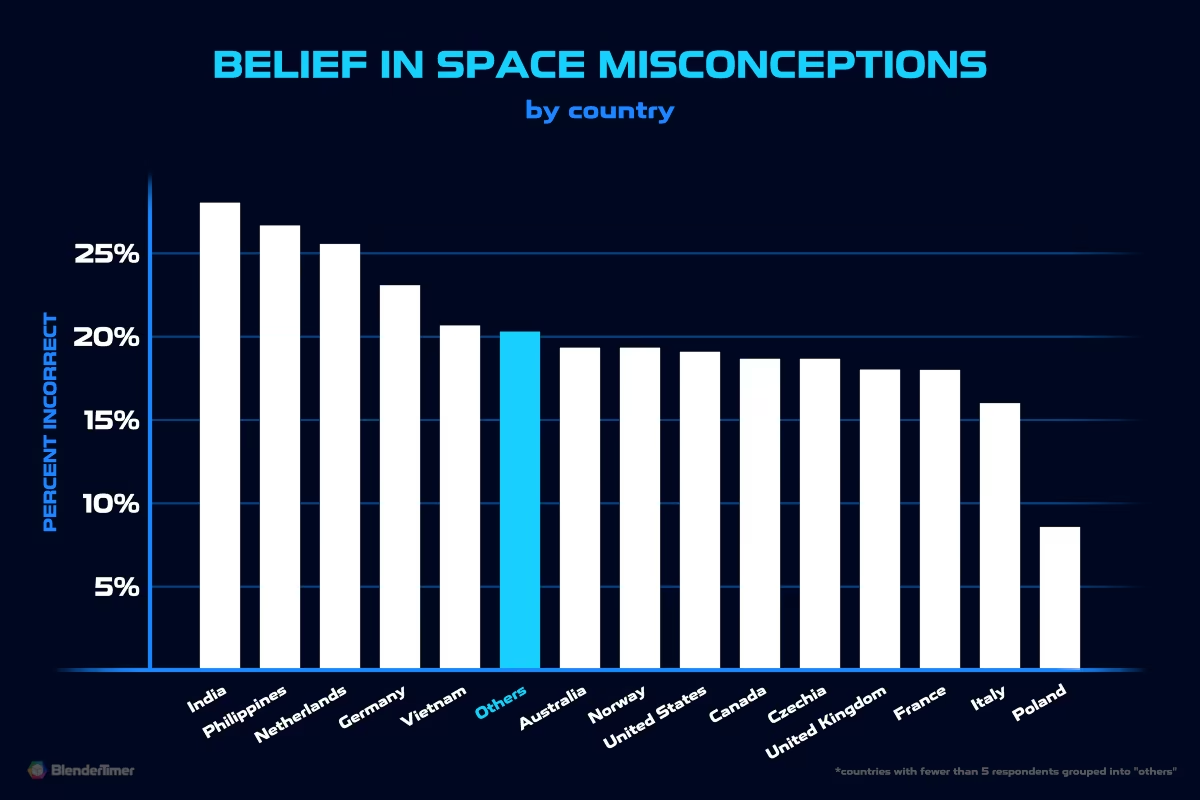
Belief in Space Misconceptions by Country
| Country | |
|---|
| India | 28.0% |
|---|
| Philippines | 26.7% |
|---|
| Netherlands | 25.6% |
|---|
| Germany | 23.1% |
|---|
| Vietnam | 20.7% |
|---|
| Others | 20.3% |
|---|
| Australia | 19.3% |
|---|
| Norway | 19.3% |
|---|
| United States | 19.1% |
|---|
| Canada | 18.7% |
|---|
| Czechia | 18.7% |
|---|
| United Kingdom | 18.0% |
|---|
| France | 18.0% |
|---|
| Italy | 16.0% |
|---|
| Poland | 8.6% |
|---|
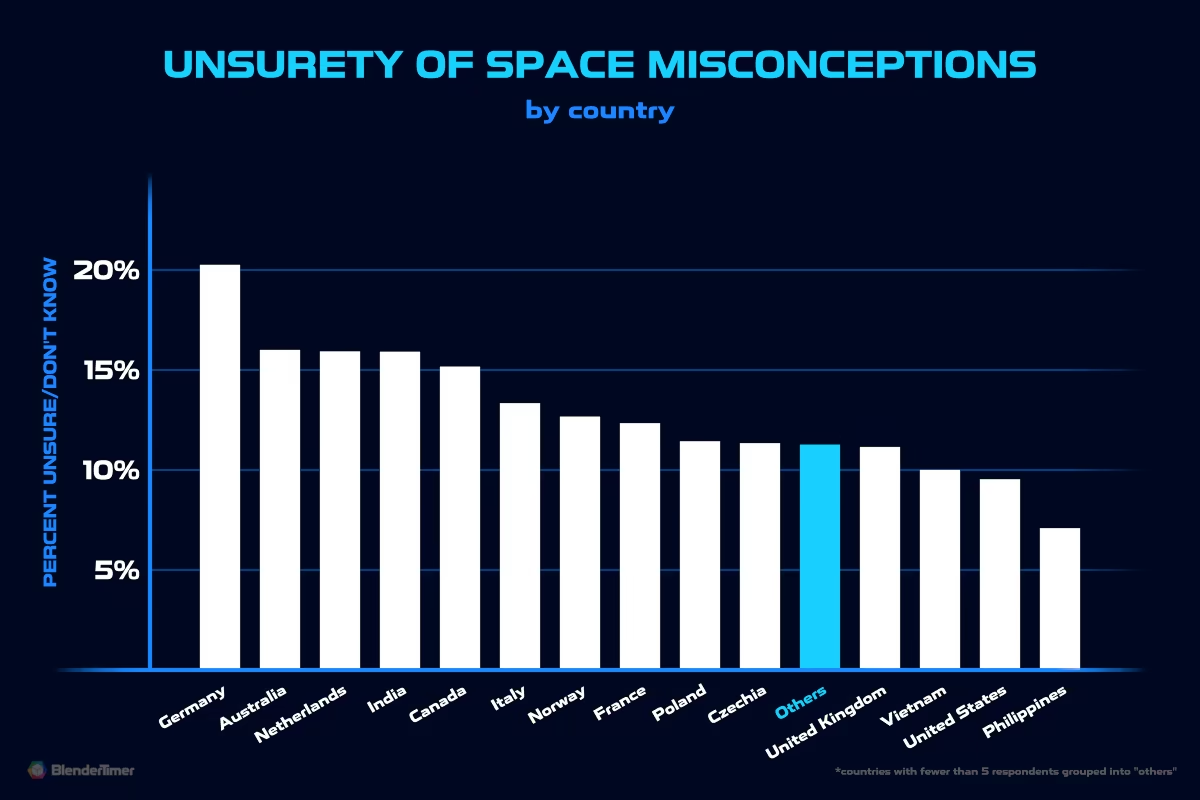
Unsurety of Space Misconceptions by Country
| Country | |
|---|
| Germany | 20.3% |
|---|
| Australia | 16.0% |
|---|
| Netherlands | 15.9% |
|---|
| India | 15.9% |
|---|
| Canada | 15.2% |
|---|
| Italy | 13.3% |
|---|
| Norway | 12.7% |
|---|
| France | 12.3% |
|---|
| Poland | 11.4% |
|---|
| Czechia | 11.3% |
|---|
| Others | 11.3% |
|---|
| United Kingdom | 11.2% |
|---|
| Vietnam | 10.0% |
|---|
| United States | 9.5% |
|---|
| Philippines | 7.1% |
|---|
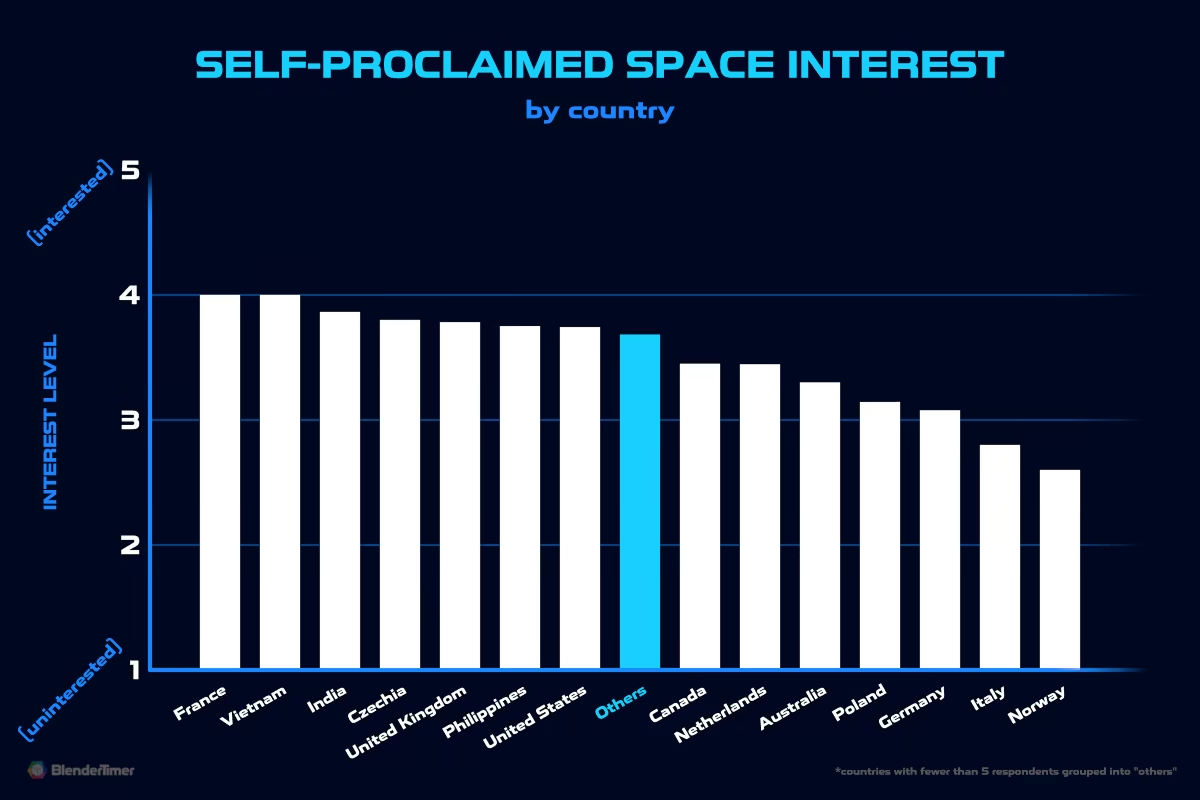
Self-proclaimed Space Interest by Country
| Country | Interest (1-5) |
|---|
| France | 4.00 |
|---|
| Vietnam | 4.00 |
|---|
| India | 3.86 |
|---|
| Czechia | 3.80 |
|---|
| United Kingdom | 3.78 |
|---|
| Philippines | 3.75 |
|---|
| United States | 3.74 |
|---|
| Others | 3.68 |
|---|
| Canada | 3.45 |
|---|
| Netherlands | 3.45 |
|---|
| Australia | 3.30 |
|---|
| Poland | 3.14 |
|---|
| Germany | 3.08 |
|---|
| Italy | 2.80 |
|---|
| Norway | 2.60 |
|---|
These results aren't exceptionally interesting until we bring in that last graph.
Surprisingly, despite India being the 3rd most interested country (in the realm of astronomy), it has the lowest amount of space knowledge as well as being the most mistaken by space misconceptions.
Norway has the least (and below average) interest in astronomy, yet scored about average on all accounts. Poland also scored exceptionally well despite being the 4th least interested country on the topic of astronomy.
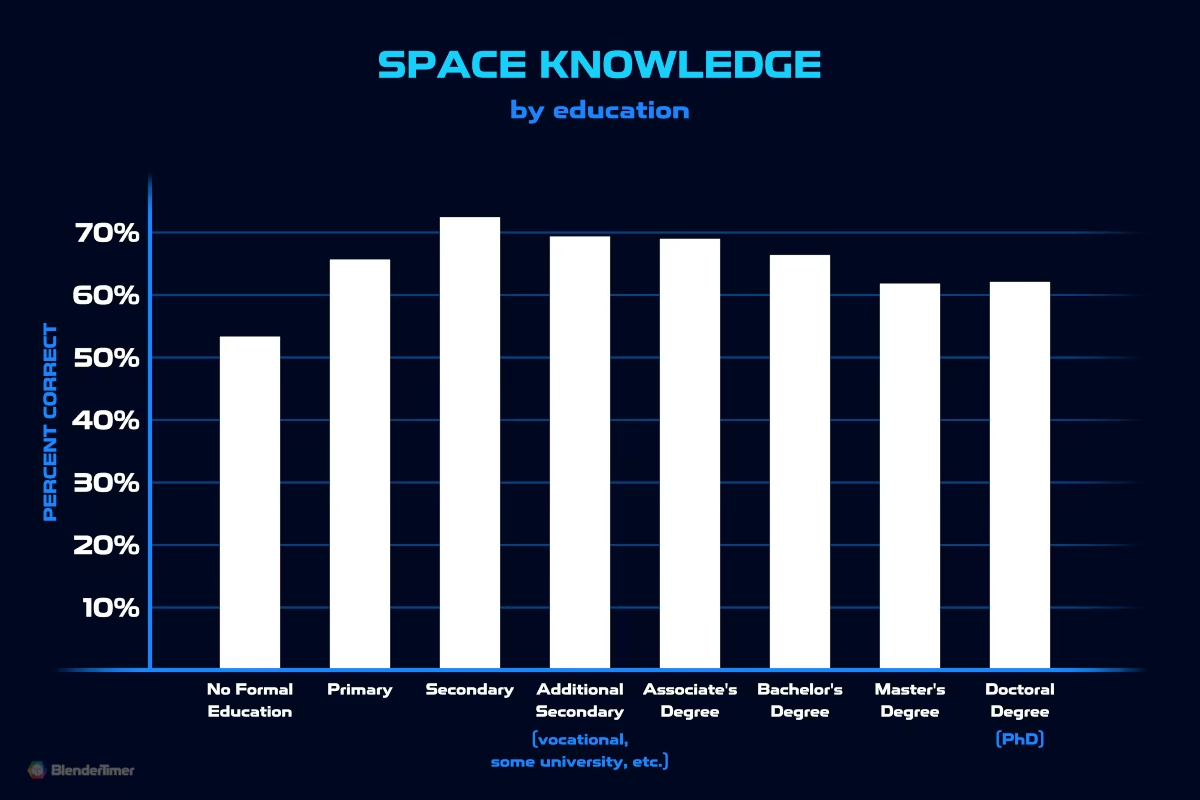
Space Knowledge by Education
| Education Level | |
|---|
| No Formal Education | 53.4% |
|---|
| Primary | 65.7% |
|---|
| Secondary | 72.4% |
|---|
| Additional Secondary (vocational, some university, etc.) | 69.4% |
|---|
| Associate's Degree | 69.0% |
|---|
| Bachelor's Degree | 66.4% |
|---|
| Master's Degree | 61.8% |
|---|
| Doctoral Degree (PhD) | 62.1% |
|---|
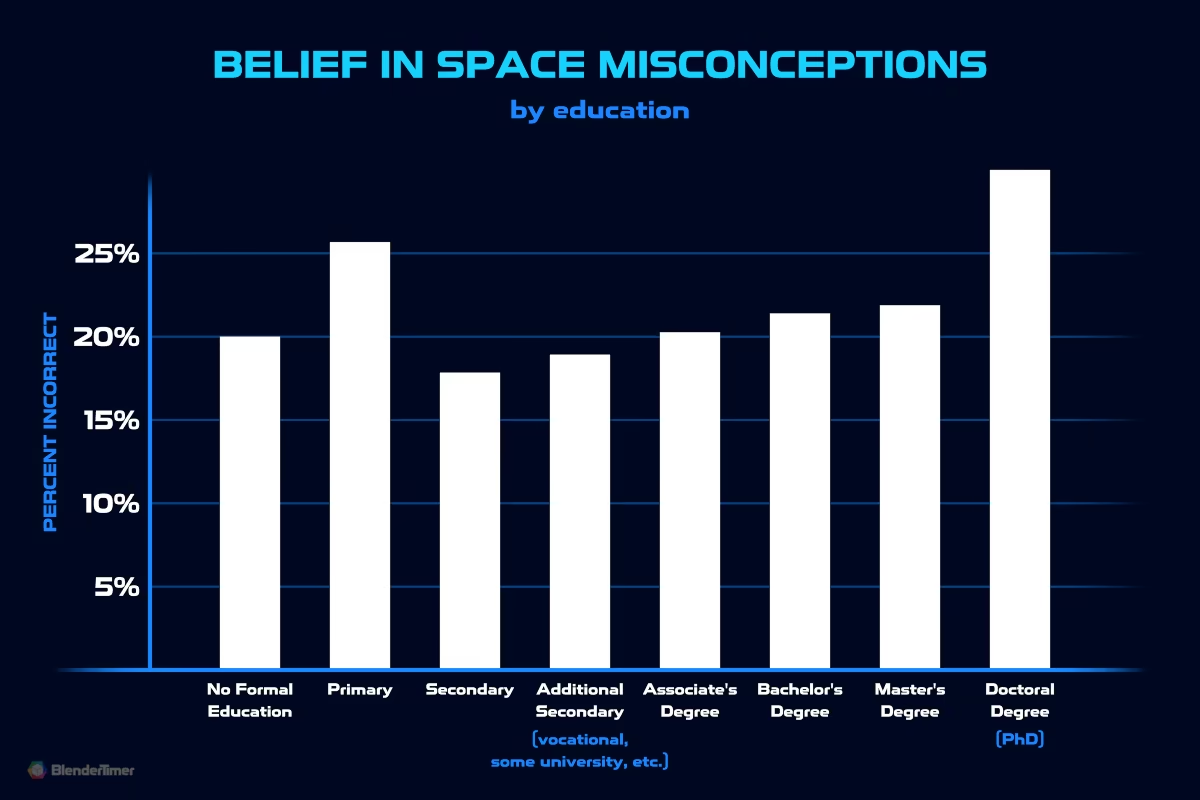
Belief in Space Misconceptions by Education
| Education Level | |
|---|
| No Formal Education | 20.0% |
|---|
| Primary | 25.7% |
|---|
| Secondary | 17.8% |
|---|
| Additional Secondary (vocational, some university, etc.) | 18.9% |
|---|
| Associate's Degree | 20.3% |
|---|
| Bachelor's Degree | 21.4% |
|---|
| Master's Degree | 21.9% |
|---|
| Doctoral Degree (PhD) | 30.0% |
|---|
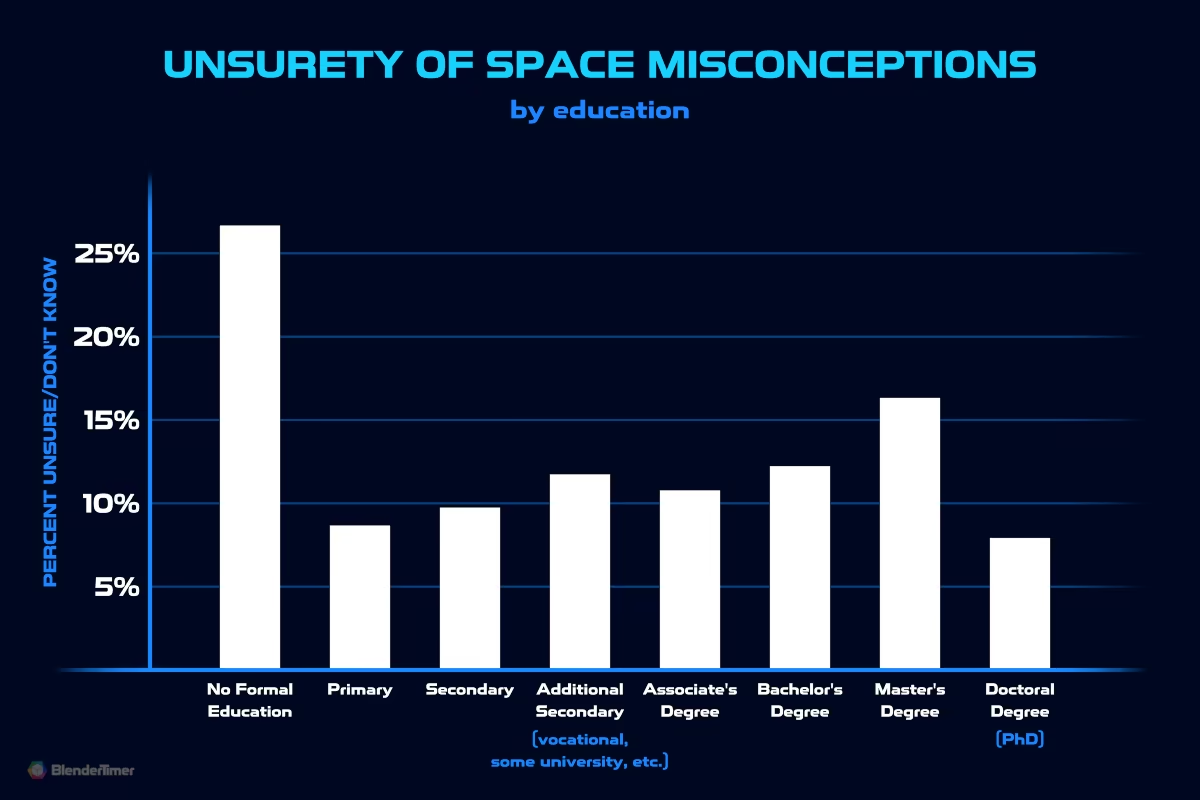
Unsurety of Space Misconceptions by Education
| Education Level | |
|---|
| No Formal Education | 26.7% |
|---|
| Primary | 8.7% |
|---|
| Secondary | 9.7% |
|---|
| Additional Secondary (vocational, some university, etc.) | 11.7% |
|---|
| Associate's Degree | 10.8% |
|---|
| Bachelor's Degree | 12.2% |
|---|
| Master's Degree | 16.3% |
|---|
| Doctoral Degree (PhD) | 7.9% |
|---|
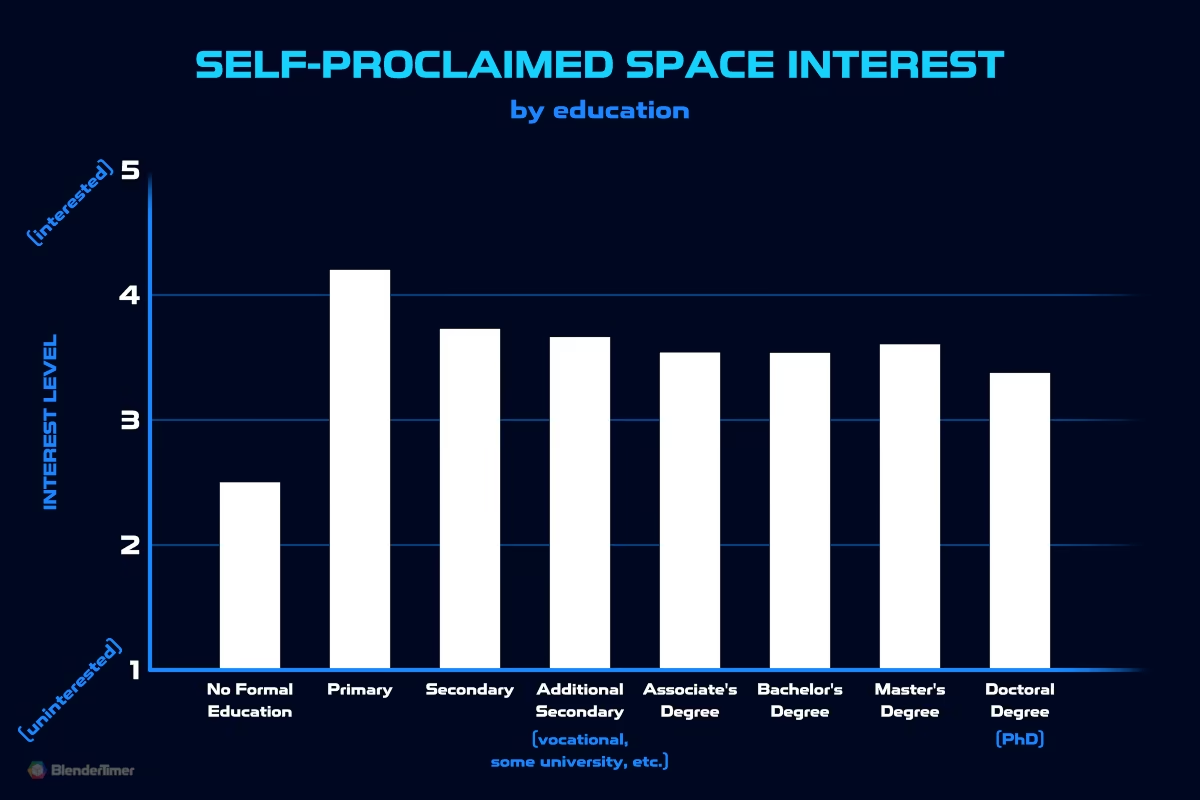
Self-proclaimed Space Interest by Education
| Education Level | Interest (1-5) |
|---|
| No Formal Education | 2.50 |
|---|
| Primary | 4.20 |
|---|
| Secondary | 3.73 |
|---|
| Additional Secondary (vocational, some university, etc.) | 3.66 |
|---|
| Associate's Degree | 3.54 |
|---|
| Bachelor's Degree | 3.54 |
|---|
| Master's Degree | 3.60 |
|---|
| Doctoral Degree (PhD) | 3.38 |
|---|
It's not too surprising that the demographic with only a standard secondary education (high school) came out on top as most of the additional degrees are likely not related to astronomy (though this doesn't seem to have decreased their interest in astronomy very much). Although, it is a little concerning that those with the highest degrees (PhD/doctoral degree) were by far the most mistaken, believing nearly one-third of space misconceptions.
If you want to do your own research into this topic, feel free to use the full dataset of answers. Both the CSV and JS downloads are completely free.
Space Misconceptions Survey.csv
Space Misconceptions Survey.js

 Other Studies and Data
 Factsheets
 The NowStream
 Web Tools